While my sabbatical is now over, I’ll continue to conduct research this spring and finish writing my women’s history of Bethel University over the summer. I’ve been very happy with my progress to this point… but I also need to confess one struggle:
I’ve found it much easier to research the experiences of faculty and staff than those of students.
First, there’s the problem of sources. By their very nature, colleges and universities generate more historical evidence about themselves than almost any other type of institution — almost everyone at a place like Bethel writes with some frequency. But faculty and administrator writing is much more likely to be preserved (I’ve already consulted several manuscript collections donated by retired faculty and staff and will soon start going through presidential papers), while student writing tends to be private and ephemeral. We do have student publications available in digital and archived forms, but no issue of a student newspaper, yearbook, or literary magazine can speak for the hundreds or thousands of students studying here at any given moment over the past 150+ years.
So there’s a problem of scarcity, but it’s magnified by a problem of abundance. Over 50,000 students have graduated from Bethel over the years, likely more than half of them women. Even if I start my narrative in 1972 and focus on traditional undergraduates and seminarians, how can I possibly account for the experiences of so many different people, most of whom come and go within four years or less?
Bethel’s employee population, by contrast, is far smaller and turns over far less frequently. Recording oral histories with three dozen faculty, staff, and administrators last summer left hundreds more uninterviewed, but I feel confident that we captured a meaningful cross-section of employee experiences.
So what’s to be done? I need to accept that any attempt I make to speak for decades’ worth of women students at Bethel will inevitably be incomplete. But I can use partial historical evidence to support my best attempt at narrating and interpreting that facet of the women’s history of Bethel.
And sometimes the archives surprise you. Before Christmas break, I came across two internal studies, conducted within a year of each other, that recorded the experiences and perspectives of multiple women students as Bethel neared the end of the 20th century. I’ll turn to the College students next week; today, the Seminary.
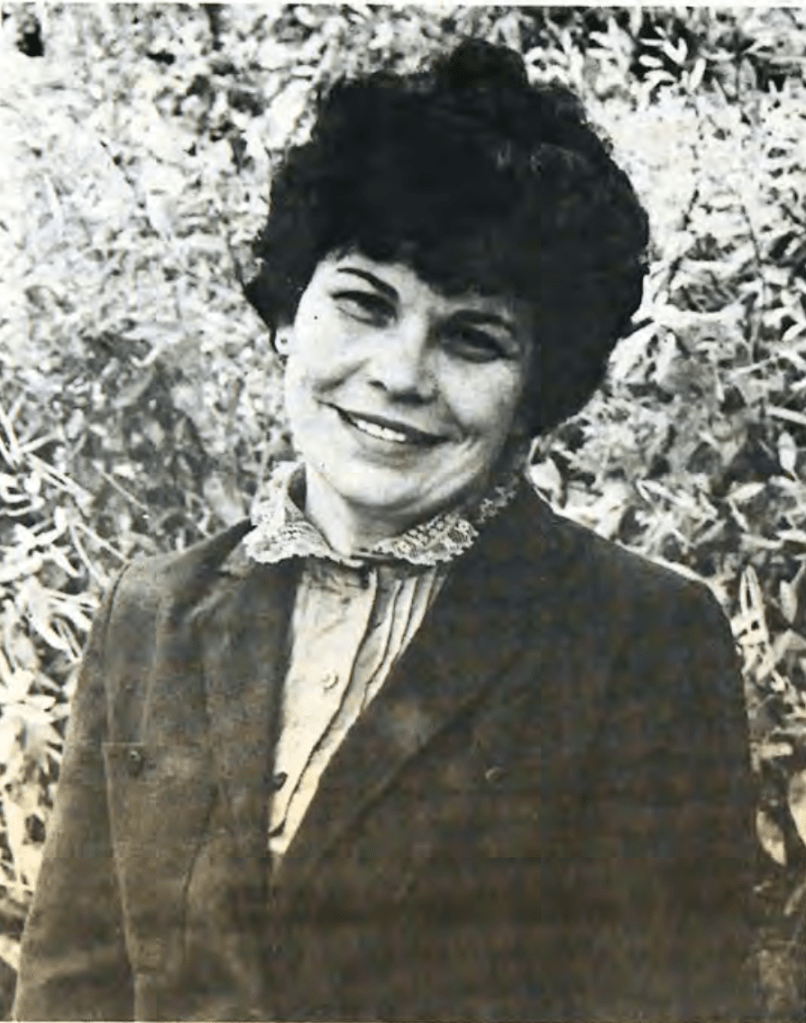
In March 1994 College communication professor Leta Frazier and her husband Phil, a pastor and adjunct professor, submitted a report to the marketing team at Bethel Seminary: “…an attempt to investigate the academic experiences of a specified group of women and determine if this institution, Bethel Seminary, is indeed fulfilling the intellectual expectations of these women…. Is the institution creating an academic experience that meets their expectations?” After completing focus group sessions with ten current students and six alumnae, plus individual interviews with three women left the Seminary before completing their studies, the Fraziers found that their subjects “desire to be an equal part of the Seminary Community, not an adjunct to a male oriented or male dominated institution. They want to establish Bethel Seminary as ‘a place of their own’ in an environment that will help them grow.”
Now, some women did experience the Seminary in that way. Nearly twenty years after Carol Shimmin became the first woman to finish an M.Div. at Bethel, some women felt “nothing but encouragement, affirmation and praise and encouragement to a degree and of a kind that I had never before experienced” or reported being “totally and beautifully accepted as an equal before the Lord with all the people in the class.” Another came to Bethel with “friends warning me that ‘this is going to be a difficult thing for you, being a woman at this school in a man’s denomination,'” only to be surprised at how well she was accepted.
However, other students and alumnae encountered professors and fellow students who “did not affirm ordination for women and made it very, very clear that it shouldn’t be an option for women.” This particularly bothered a woman who had “been BGC all my life. I went to the college, and this is a BGC school and nationally speaking, they should be affirming women in ministry if in fact the institution is saying they affirm women in ministry and [should be] providing opportunities and a female presence to represent that… it’s dominated by male gender.”
Perhaps the central finding of the Fraziers’ report is “an acute awareness that it is significantly different to be a female student at Bethel Seminary as opposed to being a male.” This awareness manifested itself in comments about everything from the lack of women authors on reading lists and the scarcity of women’s voices in chapel to the lack of women’s bathrooms in the academic building. Indeed, the Fraziers’ first recommended action step was to build more such basic amenities: “This step is essential! The present message is clear, ‘your presence, women, is not important enough to provide the basic necessities.'”
But the leading source of grievance and concern had to do with the lack of women on the Seminary faculty, a group that was actually shrinking at that point. Some respondents pointed to the departure of Beverly Brooks, assistant director of field education, whose helpful work securing internships and placements for women seminarians stood out by contrast to an unnamed male administrator who came across as “totally non-affirming… I felt just very subtly put down every time I went to that office.” But the most lamented loss in that year was that of Jeannette Bakke. Hired in 1978 after Clifford Anderson moved to the Seminary’s new campus in San Diego, Bakke’s Christian education courses were popular with the Fraziers’ focus group participants, one of whom recalled her as “the only person who provided any of the spiritual, nurturing, development, discipling classes.” But in the Brushaber administration’s “Seminary Vision A.D. 2001” plan, full-time faculty positions in fields like Bakke’s were eliminated in 1993-94, to be filled moving forward by “ministry practitioners.”
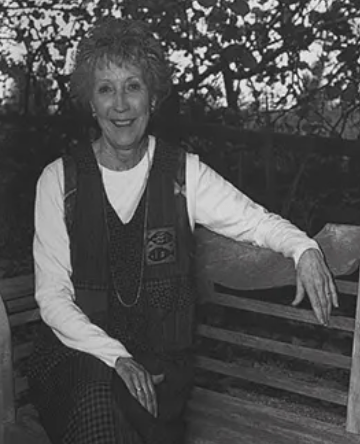
“Whatever the intention for removing Jeannette Bakke from the faculty roster,” concluded the Fraziers, “the interpretation is that the act is a decision against women students, in that it removed a unique part of their support system.” Describing the loneliness of feeling “like there’s no one out there who really understands or there aren’t enough people out there who really understand, who have gone before me in this,” one women underscored the need for female mentors who could
help us deal with these pioneer feelings… You’re not going to get it in your churches. We’re not getting it anywhere, and you’re struggling with it in your own family. If that one support that’s been Jeannette is yanked from us, what do we have? That’s what I fear. Not just the fact that we don’t have that classroom part, but that moral support behind it says that “hey, I understand and this is how we can continue to proceed.”
Another agreed with the need for female role models on the full-time faculty, but hoped to see “a woman professor who is not in a traditionally women’s role, like Christian Education. People can handle that because they say, ‘oh, yeah, women are a lot of times in Christian Education.’ But I would want to see a New Testament professor, an Old Testament professor or a Hebrew professor who is a woman.”
It’s not yet clear exactly how the administration received or responded to the Fraziers’ 1994 report. But it’s worth noting that Carla Dahl joined the Seminary faculty a year later to lead the new program in Marriage and Family Therapy. In 2000 Bethel hired Denise Muir Kjesbo (a specialist in family ministry) and New Testament scholar Jeannine Brown, who became the first woman to teach biblical studies at the Seminary since Esther Sabel. While “the Seminary was the most sort of male-dominated of all of Bethel” when she first encountered it as a student and professor, Brown described in her oral history interview last summer an ongoing commitment to make it “a livable environment for women, female students, women teaching.”
One goal of this blog is to help involve members of the Bethel community in doing the history of Bethel, so comments are always welcome! Just know that if you leave a comment at the project blog, I’ll take that as expressing your permission to quote it in the project.
 The Women of Bethel
I was a Bethel Seminary student in this era. I remember Leta and Phil’s study. I remember the lack of a women’s restroom. I use that reality as the quintessential description of the seminary as a student. Dr. Baake’s dismissal happened while I was student body president. I tried to argue with our interim provost, Dr. Prinzing, that Dr Bakke’s presence mattered not just because she was a woman but because she was the only faculty member inviting us to be formed by God, and helping us understand how to enter into that. Drs Dahl, Kjesbo, and Brown, were a gift to the seminary. It was a privilege to be their colleague and develop/deepen friendships with each of them.
Thanks for reflecting on the experience my peers and I had at the seminary.
LikeLike
Thanks for sharing that comment, Kristin!
LikeLike