Long before the 1972 start of our project’s narrative, Bethel Theological Seminary enrolled women. When Adolf and Virgil Olson published that school’s 75th anniversary history in 1946, their exhaustive list of student biographies included some sixty women, starting with Elizabeth Johnson (1879-1880).
Most of those Bethel women were preparing to serve as missionaries or Christian education workers, not to pastor a church. One exception to that rule was Ethel Ruff, a Canadian Baptist who became the first woman ordained by a Baptist General Conference church.
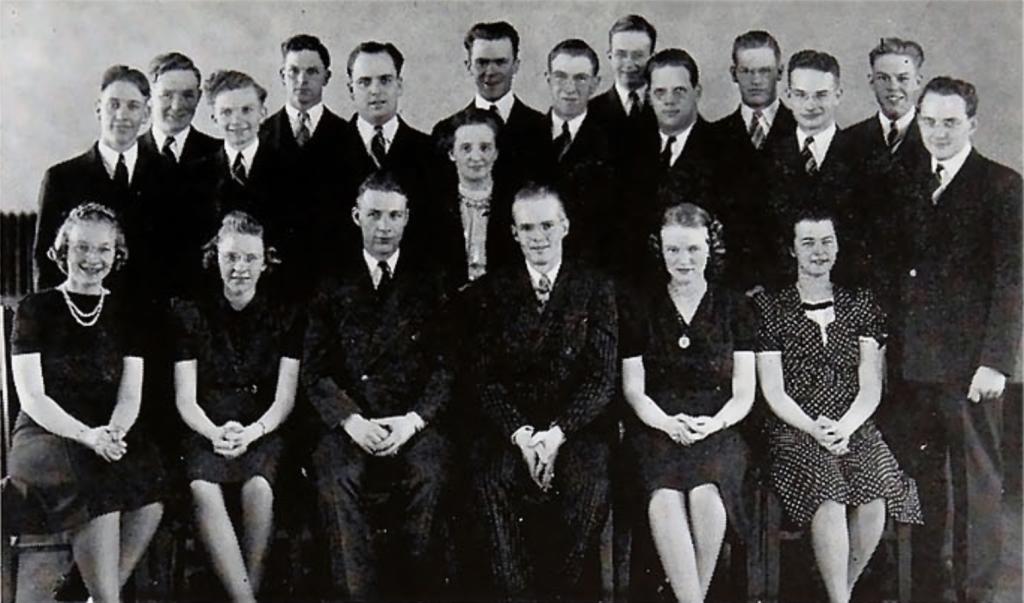
The denomination’s magazine, The Standard, retold her story thirty-one years after that historic ceremony:
The year was 1943, long before the contemporary women’s liberation movement, and the response to the event was remarkable…. Miss Ruff approached Rev. Martin Erikson, pastor of Payne Avenue Baptist Church (now Trinity), and asked to be ordained. A council of Seminary professors and area pastors met with her, and on June 6, 1943, the council “laid hands” on her and she became Rev. Ethel Ruff. Mr. Erikson submitted a report of the ordination to THE STANDARD in which he stated that, although it was unusual to ordain a woman, “the council was united in the feeling that this was of the Lord.”
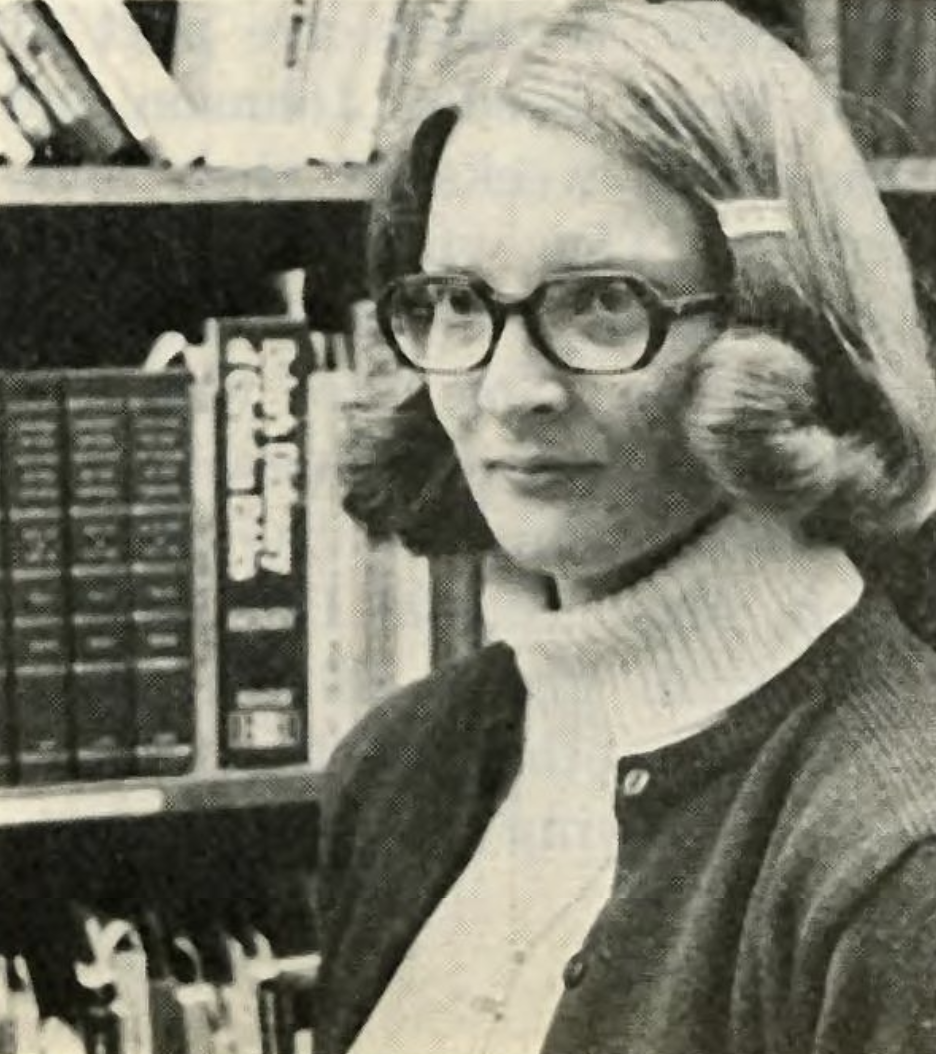
As remarkably, the author of that 1974 article about Ethel Ruff was another trailblazer in the evangelical history of women’s ordination: Carol Shimmin, the first woman to complete a master’s of divinity degree at Bethel Seminary, and one of the first women ordained by the Evangelical Covenant Church.
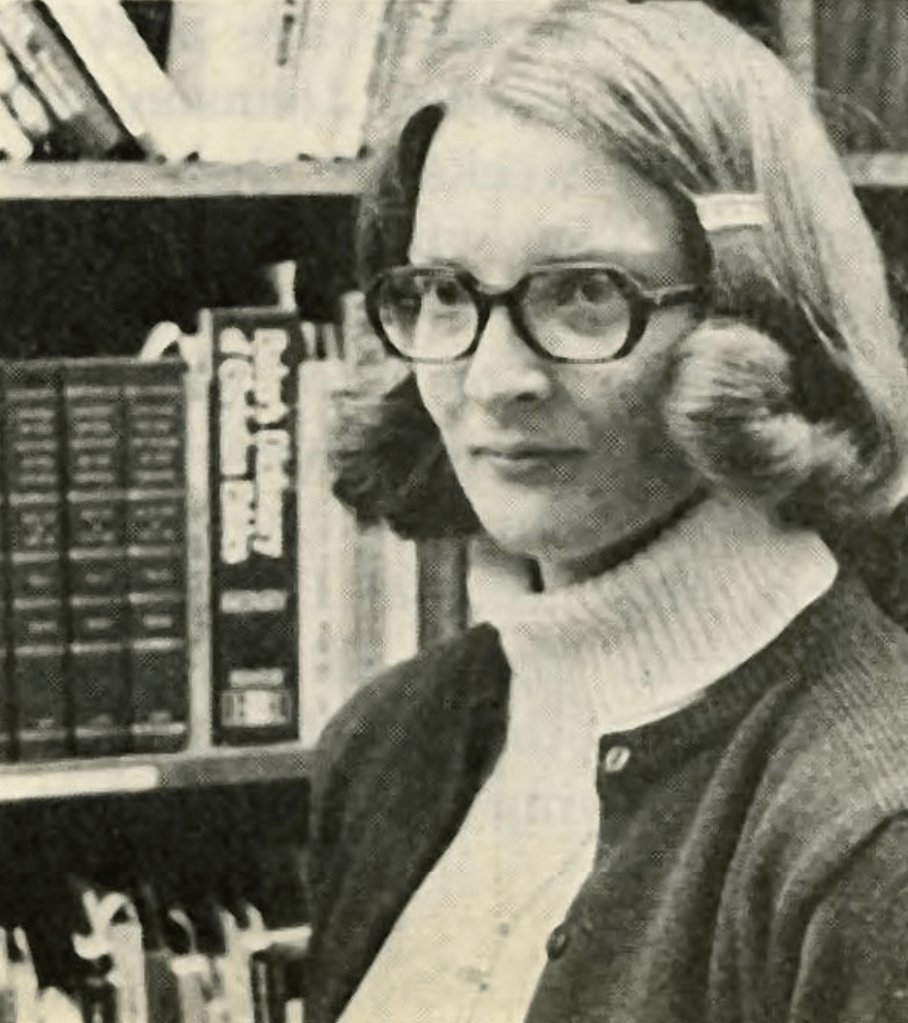
Two months earlier, The Standard had published a page-long article about five women at the Seminary — across the fold from photos of the Seminary Wives Fellowship. Most were completing Bethel’s new master’s degree in theological studies, with Shimmin the only woman on the M.Div. track at that point. “Although she cannot imagine herself in a pulpit ministry,” the Standard author clarified, “Carol would like to be ordained—because she will have the same training as pastors, because it might help in further graduate school for eventual teaching, and because she might be available for an assistant pastor’s position to counsel, etc.”
Indeed, Shimmin had originally intended to study New Testament at Princeton Theological Seminary, which required its doctoral students to hold an M.Div. (Another of the students profiled in the 1974 Standard article, Pam Johnson, went to Yale to study the Old Testament.) So Shimmin started at Bethel, but petitioned unsuccessfully to skip the preaching requirements. While she recalled enjoying those classes in the end, she added that other students found her blazers and skirts “too masculine—they wanted to see me in a dress… They could look at me as a ‘woman’ then and not have to hear what I was saying.”
In October 1975 a new M.Div. student, Susan Verunac, shared her experience studying homiletics with Standard readers: “Masculinity. The word jumped from the page as I read the list of criteria for preaching class. How will they ever rate me on that? My feelings were an even mixture of humor and hurt. Repeatedly I’d found myself reacting to situations at Bethel Seminary with these two conflicting emotions.” But while “it was obvious that the application was written for men” and she’d had to endure “jokes about being a radical feminist or about coming to Seminary to look for a husband,” Verunac ended on a cautiously optimistic note:
…there is a growing conviction that somewhere there is a ministry in which I, as an intelligent woman, can participate. I can see the professors and other men at Seminary softening, learning with me and helping me to find a meaningful area of service. This is something we’re doing together. It takes time. Slowly, honestly, we are evaluating our situation, shaping tradition and finding a place for me.
All of her professors in 1975 were men (Jeannette Bakke joined the faculty three years later), but one of them was the son of the Seattle pastor who had hired Ethel Ruff as his associate. “I shall never forget the special mystique of a feminine preacher,” Marvin Anderson remembered in a December 1975 letter to the Standard editor. Upset that an unnamed Bethel College professor had “argued that women were not qualified to teach in his discipline,” Anderson strongly defended Shimmin, Verunac, and the other women preparing for pastoral ministry:
God has ordained women as well as men to be agents of love in a world of hate; to respond to each other as friend, not as foe; to acknowledge in humility that God calls male and female to do His work…. These women and others whom God has sent my way in the Seminary enrich my days and years. May God grant me the freedom to say, “I need you to help me do the work of God.”
Nonetheless, these pioneering seminarians typically found employment outside of Bethel’s denomination. Verunac was a youth director at a local Methodist church, and Shimmin completed her internship at Lake Union Covenant Church in South Haven, MN.
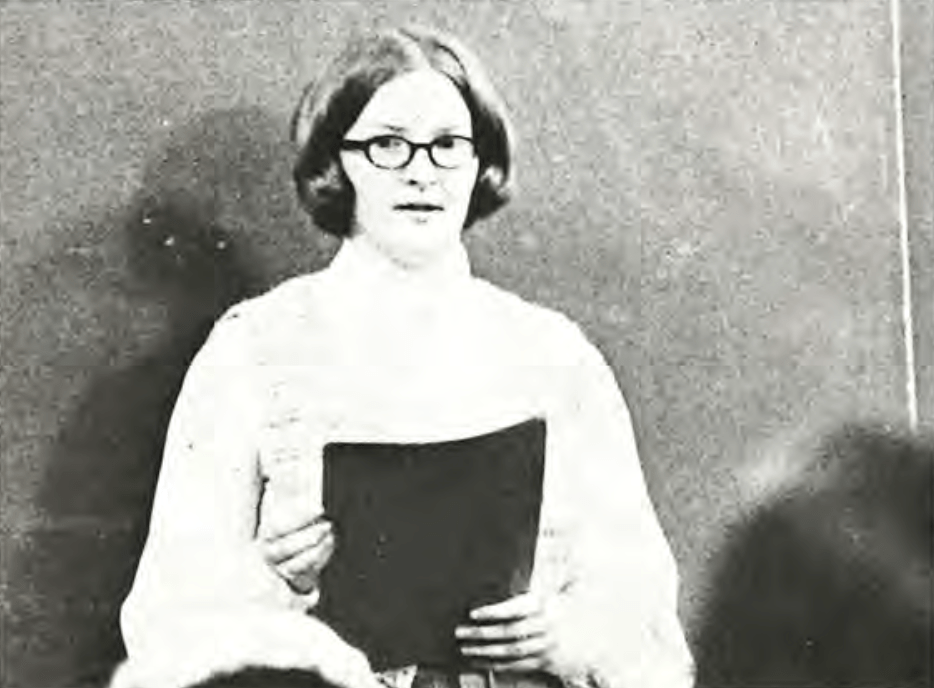
Just weeks after finishing her M.Div., she was a delegate to the 1976 annual meeting at which the Covenant Church voted to affirm the ordination of women. (Four years later, as I noted last week, the BGC governing board withdrew a resolution on women in ministry from the agenda of its annual meeting.) After being ordained in June 1978, Shimmin relocated to Ethel Ruff’s home country, accepting a call to a Covenant church in Calgary, Alberta, then teaching at Covenant Bible College in Prince Albert, Sasketchewan.
Shimmin later pastored congregations in Illinois, Indiana, and Missouri and worked for Christian non-profit organizations. “Challenges and opportunities have been plentiful throughout forty years of pastoral ministry,” she admitted, in an interview marking the anniversary of the 1976 vote. “Covenant churches willing to call a woman as pastor have, at times, been few. Continuing to know that God has called me to ministry and finding a place for service has not always been easy.”
One goal of this blog is to help involve members of the Bethel community in doing the history of Bethel, so comments are always welcome! Just know that if you leave a comment at the project blog, I’ll take that as expressing your permission to quote it in the project.
 The Women of Bethel
Dr. Penny Zettler. Bethel Seminary grad. Senior Pastor at Elim Baptist in NE Minneapolis. Perhaps the first and only female Senior Pastor in the Baptist General Conference at the time. Not aware if there are any in Converge.
LikeLike