Origins and Early Days | Snelling Avenue | Arden Hills
As a supplement to the longer thematic essays, this three-part timeline provides an overview of the women’s history of Bethel, bringing the story up to the present with the move to the suburbs and Bethel’s development into a university with adult and graduate programs. For additional context, you’ll also find some moments from the broader history of women in the United States in italics.
Arden Hills
1972
The U.S. Congress passes two landmark pieces of legislation: Title IX (“No person in the United States shall, on the basis of sex, be excluded from participation in, be denied the benefits of, or be subjected to discrimination under any education program or activity receiving Federal financial assistance”), whose effects include dramatic growth in women’s sports; and the Equal Rights Amendment (“Equality of rights under the law shall not be denied or abridged by the United States or by any State on account of sex”), which heads to state legislatures for ratification.

The College starts holding classes on the Lake Valentine campus in Arden Hills, Minnesota. Women account for 53% of all undergraduates — and nearly 60% of first-years. Nationally, women won’t outnumber men for college enrollment until the end of the decade.
1974
While Bethel drops its field hockey team after seven years, two women play on the tennis team for the first time and women begin a track club that becomes a full-fledged team one year later. (Cross-country follows in 1976.)
“One of the highlights for the recognition of women was the UN-sponsored International Women’s Year Conference held in Mexico City and presided over by the Attorney General of Mexico—a man. On a national level the Year of the Woman was no more memorable — the Equal Rights Amendment was never passed and the unending ‘Should women be allowed to teach Sunday School?’ (or, ‘What did Paul really mean?’) debate at Bethel remained unresolved.”
Bethel College student Diana Gonzalez, reviewing 1975 for The Clarion
1976
Three years after graduating from Bethel College, Carol Shimmin (later Nordstrom) becomes the first woman to earn an M.Div. from Bethel Seminary. In 1978 she will be one of the first women ordained by the Evangelical Covenant Church.
1977
Originally hired in 1968 to teach Physical Education and coach the new volleyball team, women’s athletic director Tricia Brownlee moves into academic administration, retiring as College Dean of Academic Programs in 2001.
Bethel Seminary West opens at College Avenue Baptist Church in San Diego, California. By its 10th anniversary, 25% of its students are women, as opposed to 15% in Minnesota.
1981
Sandra Day O’Connor becomes the first woman to serve on the Supreme Court of the United States, fulfilling a campaign promise by new president Ronald Reagan.
1984
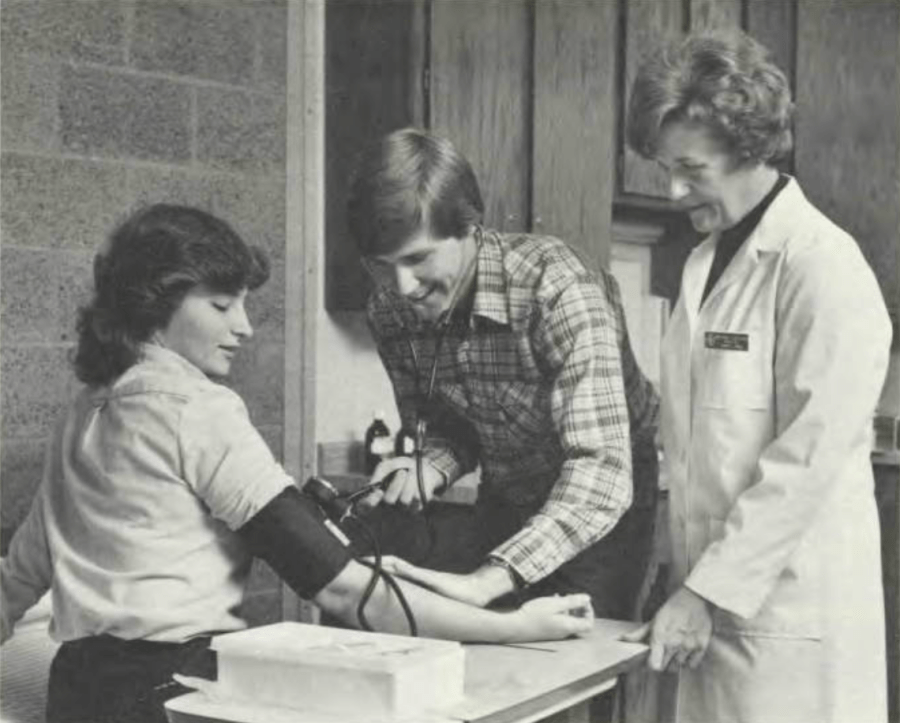
The new Nursing Department celebrates its first graduates. The long-delayed launch of a Nursing program has dramatic effects on gender demographics in the College, doubling the number of women on faculty and pushing the women’s share of student enrollment towards 60%.
1985
After completing her M.Div. at the Seminary, Sherry Bunge (later Mortenson) is hired to lead a new discipleship program for College students. The first woman to serve as a campus minister at Bethel, she will stay until 2007.

1986
An ad hoc faculty committee for Women’s Concerns begins to meet in the College. Initially, that group concentrates on promoting Women’s History Month and combatting sexist language and sexual harassment on campus. But as more and more working mothers join the faculty, it will shift its focus to improving Bethel’s maternity leave policy.
1987
Former College professors John Piper and Wayne Grudem co-found the Council on Biblical Manhood and Womanhood, meant “primarily to help the church defend against the accommodation of secular feminism.” Months later, retired Bethel journalism professor Alvera Mickelsen and other evangelical feminists organize Christians for Biblical Equality, whose founding statement is signed by several current and future Bethel professors.
1989
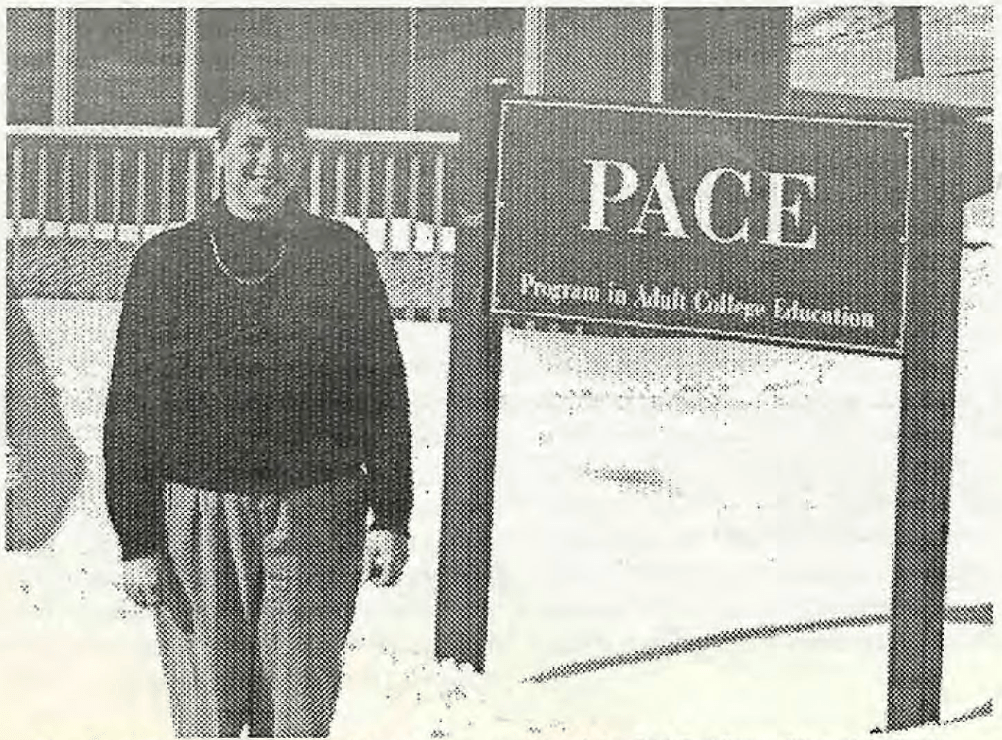
Bethel founds its Program in Adult College Education (PACE), an early attempt to meet the educational needs of non-traditional learners. Under the leadership of Wendy Balzer, Associate Dean for Continuing Studies, Bethel also begins to develop its first non-theological graduate degrees. As of 2023-24, women account for over five-eighths of enrollment in adult and graduate programs.
1993
Women’s sports continues to grow in the College, with soccer starting its first NCAA season in the fall and softball returning in spring 1994 after a nine-year hiatus. By the end of the decade, women will account for just under 40% of varsity student-athletes — and 62% of overall College enrollment.
“I think women really need role models and when there are no women faculty [at the Seminary] that’s a strong nonverbal message that you’re sending to women that you don’t belong here”
Participant in 1994 focus group of women at Bethel Seminary
1995
College alumna Carla Dahl joins the Seminary faculty at the head of a new Marriage and Family Therapy program, despite an attempt by complementarians in the Baptist General Conference to vote down her hire.
2000
Bethel marks Women’s History Month by publishing the first in a series of three annual devotionals written by women employees, alumnae, and students.
“It is my prayer and desire that through this devotional booklet you will have a glimpse into the lives of women who are currently or have been a part of the Bethel family.”
Student development dean Barb Martin, introducing the first women’s devotional
Jeannine Brown becomes the first woman since Esther Sabel to serve as a full-time Seminary professor teaching biblical studies. Theologian DesAnne Hippe follows in 2003.
2004
Bethel College and Seminary is renamed Bethel University, comprising the College of Arts and Sciences (CAS), College of Adult and Professional Studies/Graduate School (CAPS/GS), and Seminary.
2008
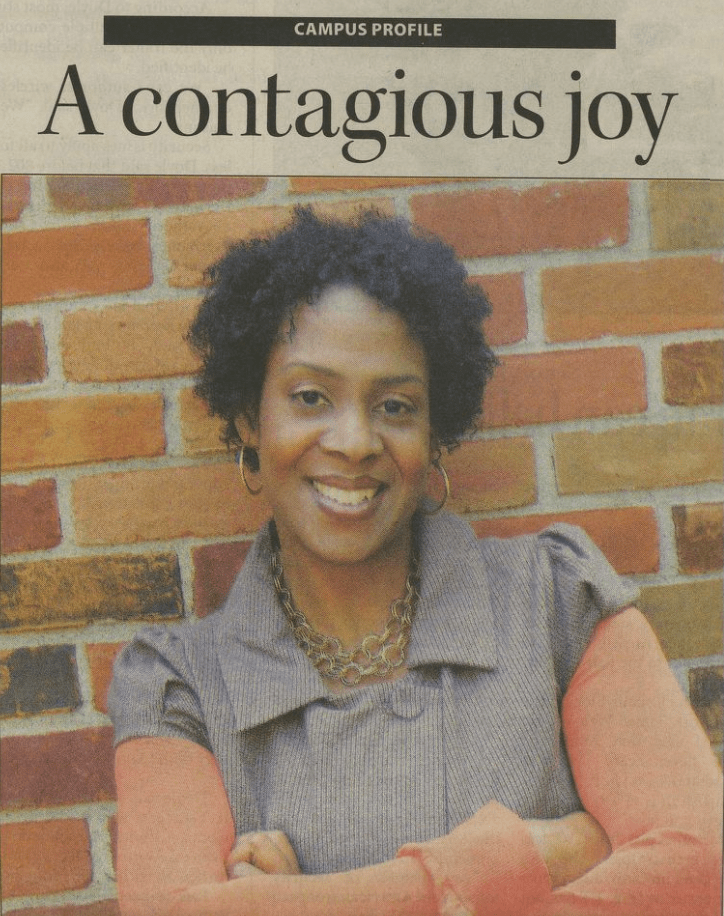
As Jay Barnes succeeds George Brushaber as university president, Laurel Bunker becomes the first woman and first African American to serve as Bethel’s lead campus pastor.
2013
Secretary of Defense Leon Panetta ends the ban on American women serving in combat.
After several years of planning and debate, the CAS faculty approves an interdisciplinary minor in gender studies, hosted by the History and Philosophy departments.
CAS dean Deb Harless is named provost, the first woman at Bethel to hold a position that’s second only to president at most American universities.
2016
Democrat Hillary Clinton becomes the first woman nominated for the presidency by a major American party. While she receives nearly 3 million more votes than Donald Trump, the Republican prevails in the Electoral College, 304-227.
2023
Provost Robin Rylaarsdam announces a new employee policy doubling paid time off for parental leave from 6 to 12 weeks — and expanding the benefit to cover fathers and adoptive parents.
Origins and Early Days | Snelling Avenue | Arden Hills
 The Women of Bethel