Origins and Early Days | Snelling Avenue | Arden Hills
As a supplement to the longer thematic essays, this three-part timeline provides an overview of the women’s history of Bethel, starting with the school’s origins in Swedish Baptist immigration and the early years of the Seminary and Academy. For additional context, you’ll also find some moments from the broader history of women in the United States in italics.
Origins and Early Days
1848
The first women’s rights convention in the United States is held in Seneca Falls, New York. “[Man] has usurped the prerogative of Jehovah himself,” argues the convention’s Declaration of Sentiments, “claiming it as his right to assign for [woman] a sphere of action, when that belongs to her conscience and to her God.“
1852
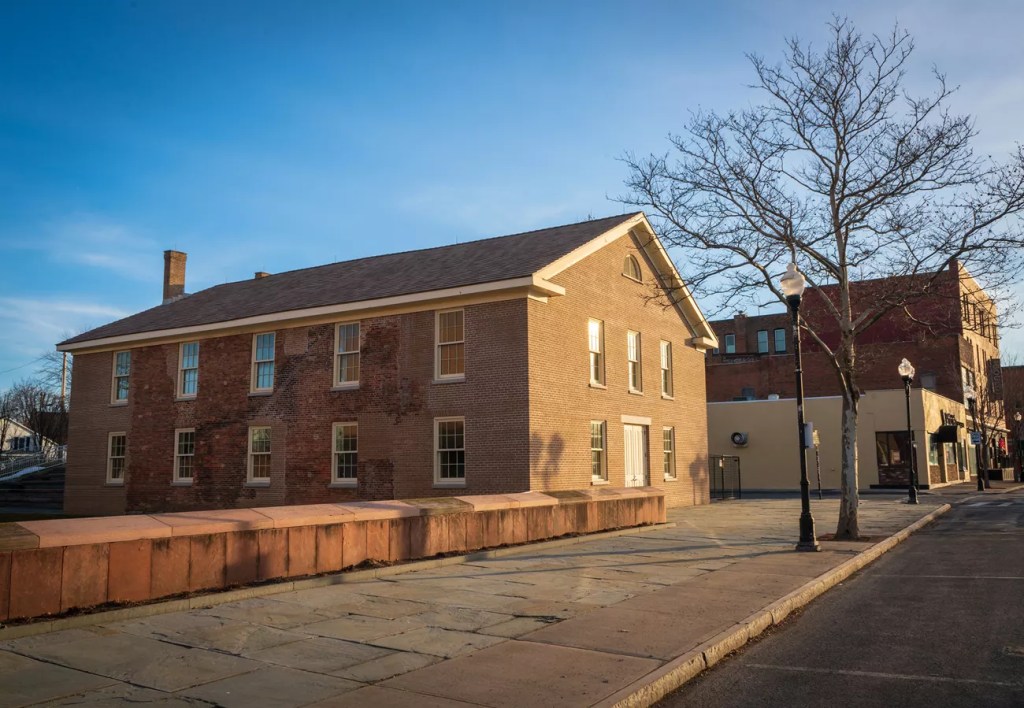
Over a million Swedes migrate to the United States between 1850 and 1930, including Baptists like Gustaf Palmquist, who founds America’s first Swedish Baptist church in Rock Island, Illinois. A second pioneering congregation forms one year later in Houston, Minnesota, with women making up the majority of its charter members.
1869
Wyoming Territory becomes the first part of the United States to enact women’s suffrage. The 15th Amendment is ratified the following year, affirming the right of Black men to vote but leaving the status of women unclear.
1871
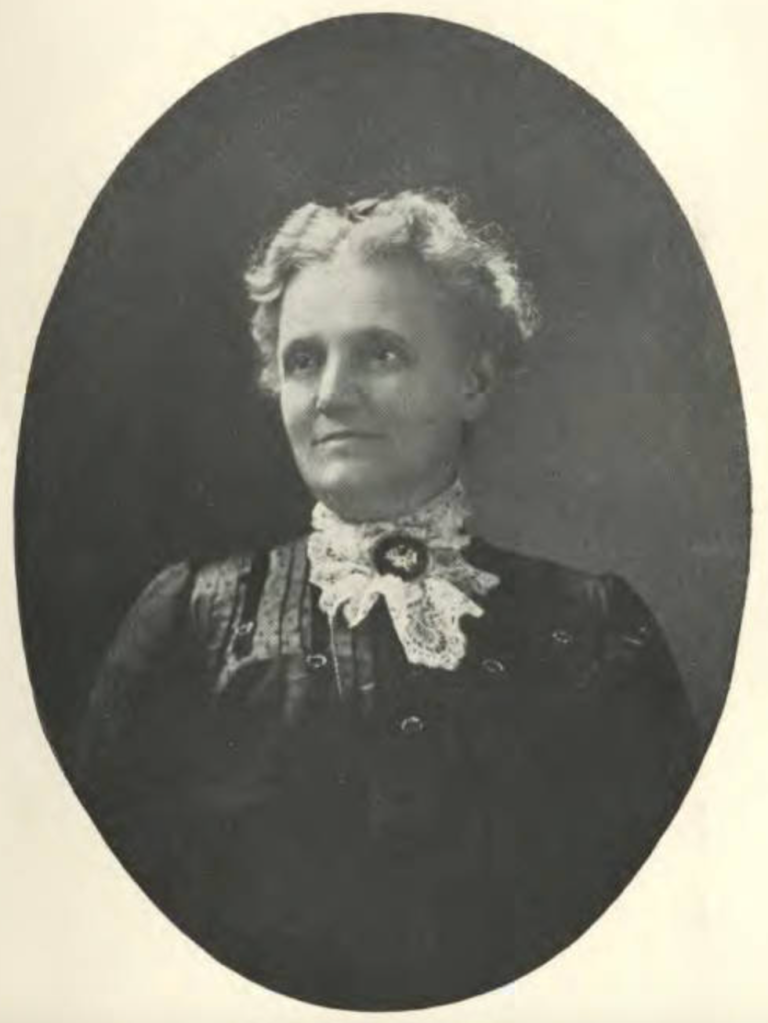
After returning to the United States to seek health care for his American wife, Annie, Swedish Baptist pastor and Civil War veteran John Alexis Edgren founds a small seminary in Chicago, Illinois.
1879
Elizabeth Johnson becomes the first woman to enroll at Edgren’s seminary, preparing to serve as a home missionary among fellow Swedish immigrants in Chicago, Minneapolis, and New York. Anna Nelson follows one year later.
1884
The Swedish Baptist Theological Seminary temporarily relocates to St. Paul, Minnesota, where its student body includes one woman, Betty Lavinia Lelley. During the Seminary’s first stint in Minnesota, J.A. Edgren’s daughter Julia becomes the first woman on its faculty, teaching history and music courses. The following year the seminary moves to Stromsburg, Nebraska, enrolling one more woman: Ada Henrietta Dahlgren.
1888
Minnesota schoolteacher Johanna Anderson travels to Burma, the first Swedish-American Baptist foreign missionary. That same year, a Swedish evangelist named Amanda Yman leads a revival at Baptist churches in Isanti County, Minnesota.
1889
Carl Gustaf Lagergren takes over as dean of the Seminary, now the Swedish department of the University of Chicago Divinity School. One alumnus from the time remembers Lagergren’s wife, Selma, as being “always like a mother and friend to the students.”

1893
Smith College professor Sanda Berenson organizes the first women’s basketball games. “Unless a game as exciting as basketball is carefully guided by such rules as will eliminate roughness,” warns Berenson, “the great desire to win and the excitement of the game will make our women do sadly unwomanly things.” Her revised rules, minimizing movement and physical contact, are widely used at schools and colleges like Bethel until the early 1970s.
1905
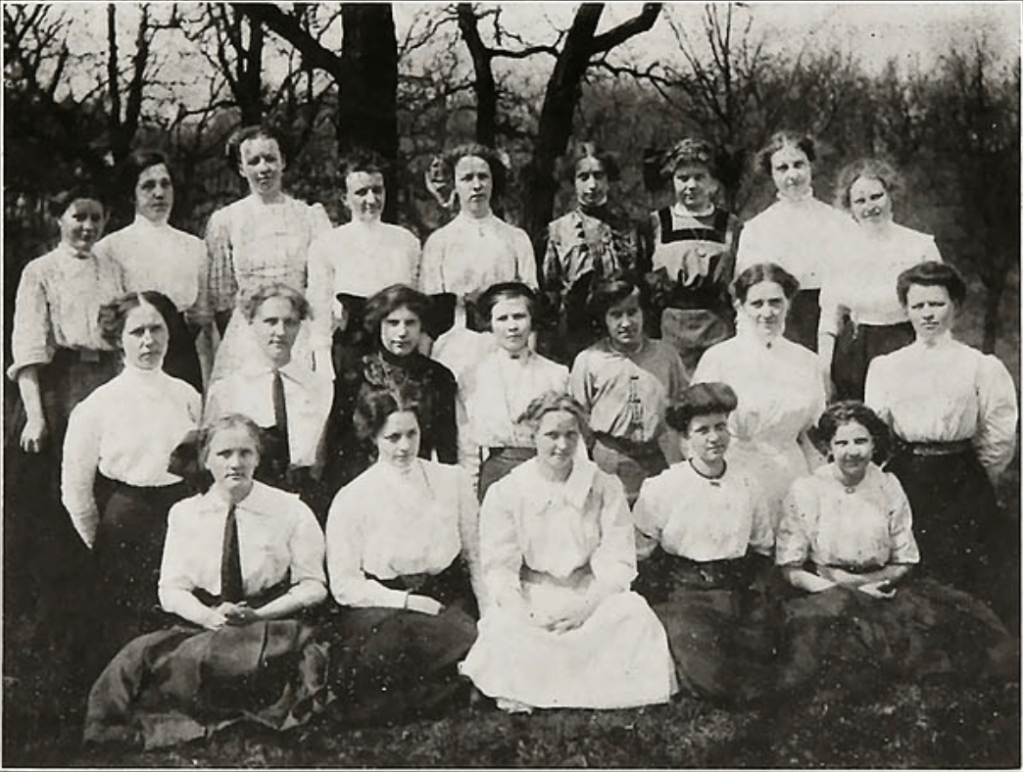
Bethel Academy is founded at Elim Baptist Church in northeast Minneapolis. A secondary school that primarily enrolls Swedish immigrants and their children, the Academy is coeducational from the start.

1907
Swedish Baptists in St. Paul, Minnesota found a nursing school at Mounds Park Sanitarium under the leadership of Mary Danielson, previously a missionary in Japan. Later known as the Mounds-Midway School of Nursing, it will serve as a forerunner to Bethel’s own Nursing program.
1913
Olivia Johnson becomes the first Academy graduate to enter the foreign missions field, serving a five-year stint in the Philippines. She dies of influenza in 1919, while home on furlough.
Origins and Early Days | Snelling Avenue | Arden Hills
 The Women of Bethel