
In 1987 former Bethel College professors Wayne Grudem and John Piper co-founded the Council on Biblical Manhood and Womanhood. According to its website, CBMW was
established primarily to help the church defend against the accommodation of secular feminism. At this time many evangelicals were beginning to experiment with an ideology that would later become known as evangelical feminism. This was a significant departure from what the church had practiced from its beginning regarding the role of men and women in the home and local church. The effects of this departure have not been benign. As evangelical feminism continues to spread, the evangelical community needs to be aware that this debate reaches ultimately to the heart of the gospel.
Four years later, Grudem and Piper co-edited a book, Recovering Biblical Manhood and Womanhood: A Response to Evangelical Feminism.
But while I’ve already written about the influence of anti-feminism on the Bethel campus in the Seventies and Eighties, I’ve yet to tell the story of evangelical feminism — for which Bethel was a key center in both its early development and its mid-Eighties split.

Pamela D.H. Cochran begins her account of evangelical feminism (published with New York University Press in 2005) in 1969, when a Christian journalist named Nancy Hardesty left Eternity magazine to teach English at Trinity Evangelical Divinity School outside Chicago. She soon met Letha Dawson Scanzoni, who invited Hardesty “to join her in writing a book on women’s liberation from a Christian perspective” (11).
While some secular feminists saw the Bible as essentially patriarchal, evangelical feminists like Scanzoni and Hardesty “began with scripture and what it said about God and women, not with their feminist convictions or personal experience.” In their best-selling collaboration, All We’re Meant to Be, Cochran found that they “could show that many of the passages traditionally seen as limiting women’s roles were situationally limited and still maintain a strong view of biblical authority” (26). “We did not become feminists and then try to fit our Christianity into feminist ideology,” Scanzoni later wrote in response to one evangelical critic. “We became feminists because we were Christians” (quoted on 65).
All We’re Meant to Be was a hit when it finally came out in 1974, by which point Hardesty had also taken part in the Thanksgiving 1973 conference of politically progressive evangelicals organized by Ron Sider. In the resulting Chicago Declaration of Evangelical Social Concern, the 53 original signers (five women) acknowledged problems of gender alongside those of poverty, materialism, hunger, racism, and warfare: “We acknowledge that we have encouraged men to prideful domination and women to irresponsible passivity. So we call both men and women to mutual submission and active discipleship.”

Hardesty had circulated a longer list of resolutions on gender equality and met with a small group of women “united by their shared feelings of isolation as feminists within the Christian community” (13). In 1974 she and Cheryl Forbes of Christianity Today joined the committee planning a follow-up conference; thirty women attended, discussing topics ranging from women’s ordination (several attendees refused to support that resolution) to inclusive language to child care. Daughters of Sarah, a new Christian feminist journal edited by Lucille Sider Dayton, became a kind of “clearinghouse” (15) for those proposals, and its mailing list (1,000 subscribers after two years) helped seed the Evangelical Women’s Caucus (EWC), which first met in Washington, DC over Thanksgiving 1975.
At this point, our stories start to converge. Minnesota’s was one of the first and best resourced state EWC chapters under the leadership of Catherine Clark Kroeger. Bethel professors Alvera and Berkeley Mickelsen were among the thousand-some participants at the caucus’ second national meeting (1978), and Bethel soon hosted talks by evangelical feminists like Scanzoni and Virginia Mollenkott.
In his Clarion response to the latter’s 1980 Chapel talks, John Piper suggested that Mollenkott interpreted Galatians 3:28 (“There is neither Jew nor Greek, there is neither slave nor free, there is neither male nor female; for you are all one in Christ Jesus”) in such a way “that even committed homosexuality is condoned.” Cochran notes that Hardesty and Mollenkott had discussed lesbianism in response to a question at the first EWC caucus. But for the most part, “evangelical feminists ignored or distanced themselves from lesbianism” (76) in the first decade or so of the EWC, with the topic off the official agenda at the 1978 and subsequent meetings.
That soon changed. Mollenkott had come out privately to Scanzoni in 1975, leading three years later to their collaboration on Is the Homosexual My Neighbor?, which “argued that the practice of homosexuality was compatible with biblical Christianity” (77). The EWC leadership tried to maintain its founding focus on women’s equality, but by 1984 delegates were attempting to put forward motions related to homosexuality, abortion, war, pornography, and other issues. Two years later, with Hardesty chairing the meeting in Fresno, California, a resolution was brought forward affirming that “homosexual people are children of God,” recognizing “the lesbian minority” within the organization, and taking “a firm stand in favor of civil-rights protection for homosexual persons.”
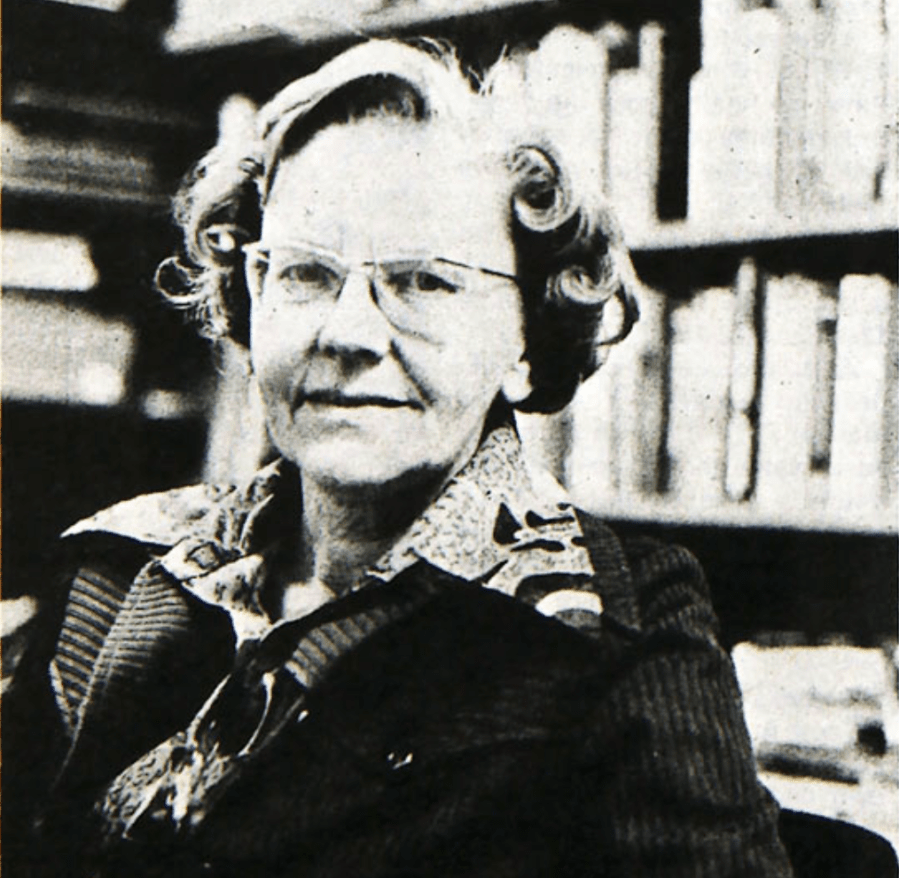
That motion passed, but it sparked a backlash, particularly among delegates from Minnesota like Catherine Kroeger and Alvera Mickelsen. “The lesbians were there in force,” the latter reported in a letter to Minnesota EWC members. “No one was prewarned and prepared to deal with the implications of the resolution.” One of many early members who didn’t want the caucus to take political stances beyond its support of the Equal Rights Amendment, Mickelsen also worried that the EWC was also drifting away from the first word in its title:
If we are to be all-inclusive, why not join NOW [the National Organization for Women] and forget the “evangelical” part of our name?…
Each of us has only so much time and energy. Berkeley and I feel we have a ministry to bring the gospel of freedom to women in evangelical churches. We cannot afford to have that ministry diminished by association with a national group strongly influenced by a sub-rosa philosophy and approach that we cannot support biblically.
Adding to the urgency of the debate was the scheduled site of the next EWC meeting: Bethel. Mickelsen quickly made clear that the Minnesota chapter could no longer host the 1988 meeting, “as it was felt we could not hold it at Bethel College with the gay rights resolution that had been passed.”
(She was almost surely right. In a Clarion article on feminism that December, Psychology professor Kathy Nevins warned that the term already connoted “radical feminist, lesbian” to many evangelicals. “Right there, you have equated one of the greatest phobias of the church today—homosexuality. But by seeing the feminist as a homosexual you sink your own ship.” As debate over that article continued into early 1987 in the letters to the editor section, one Bethel senior could not understand “why anyone who claims to be a Christian should even want to be associated in any way with a concept which to most Christians generally connotes ideas totally antithetical to Christian faith,” including “an acceptance of the homosexual lifestyle as normal and legitimate.” Three years later, the same student paper published the resignation letter of Social Work professor Don Belton, who said he had “been directed not to teach about homosexuality,” on which he had come to hold “a position different from that espoused by the majority of the evangelical community.”)
By the end of 1986, the Minnesota chapter had voted to leave the EWC, which later changed its name to the Evangelical and Ecumenical Women’s Caucus and does business online as Christian Feminism Today. Several evangelical feminists convinced Catherine Kroeger to “organize another group that could continue with the more moderate goals of influencing people in evangelical churches” (102). Taking inspiration from an English group of women and men associated with John Stott, Kroeger, Mickelsen, et al. began to publish their own newsletter, Priscilla Papers, then formed a new organization still based in Minneapolis: Christians for Biblical Equality (now CBE International).
Its first conference took place at Bethel in July 1989, when delegates adopted “Men, Women, and Biblical Equality,” a paper that affirmed the Bible (“the authoritative Word of God”) as teaching “the full equality of men and women in Creation and in Redemption.” Its original list of signers included several former, current, and future Bethel faculty, including Phyllis Alsdurf, James Brooks, David Clark, Nils Friberg, Alfred and Barbara Glenn, John Herzog, Herb Klem, Art Lewis, Alvera and Berkeley Mickelsen, Bob Rakestraw, and James D. Smith III.
One goal of this blog is to help involve members of the Bethel community in doing the history of Bethel, so comments are always welcome! Just know that if you leave a comment at the project blog, I’ll take that as expressing your permission to quote it in the project.
 The Women of Bethel