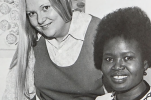
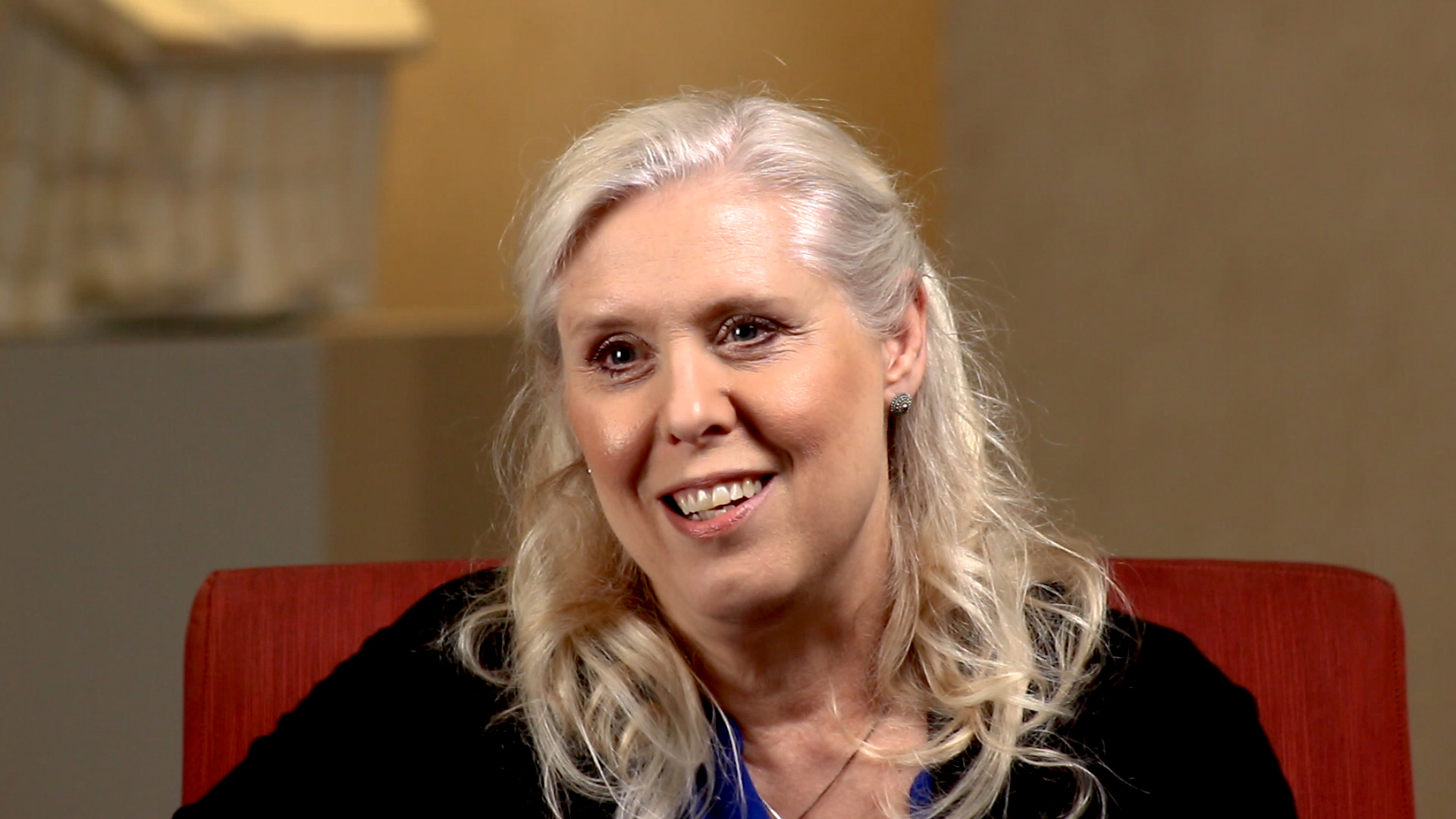
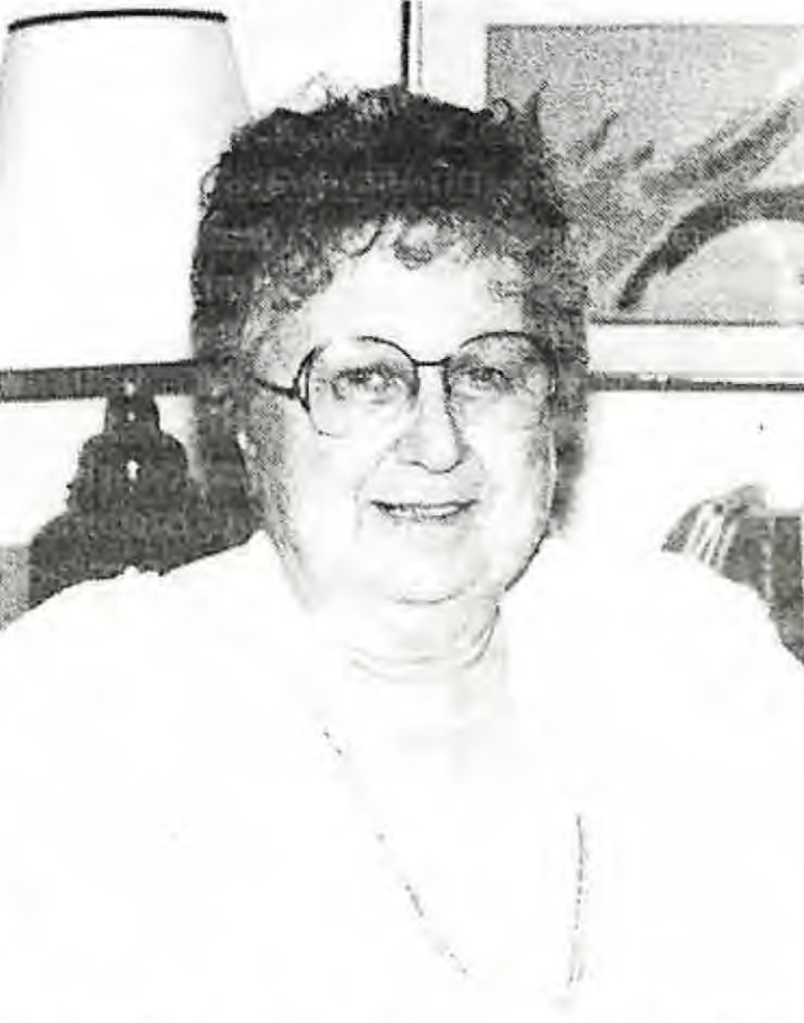
Committee work tends to rank fairly low on the list of priorities for college professors, but starting in 1986, several Bethel faculty volunteered additional service time in order to identify and address concerns specific to the women of Bethel. Initially an ad hoc group whose membership included Jeannine Bohlmeyer (English), Carol Bonner (Education), Tom Correll (Anthropology), Eleanor Edman (Nursing), Barb Jensen (later Martin, Student Development), Kathy Nevins (Psychology), and Shirley Olseen (Social Work), the Women’s Concerns Committee (WCC) continued to meet through the early 2000s.
Minutes and memoranda from that committee make up another important file for me in Bethel’s archives. So expect to hear me mention the WCC more than a few more times before this project concludes. But today I thought it would be interesting to look back at the preliminary list of agenda items identified by Bohlmeyer, Correll, and Olseen when they first met in May 1986, to get some sense for how some Bethel faculty defined “women’s concerns” at that point — and how that list changed over time.
Most broadly, the original group articulated the need “to combat bigotry and sexism” and “to challenge the traditional anti-feminist bias” in a community that “may invest too heavily in superficial concerns of weight, attractiveness, etc.” Some proposals never went very far (e.g., host seminars that would “re-educate faculty who have adopted sexist views by default”), but others planted seeds for initiatives that have already come up in this project or are on my list of topics to research.
Teaching Women’s History
That I could dedicate a post to Bethel observations of Women’s History Month reflects one early success for the committee, which played a role in organizing events like a 1987 presentation by linguistics professor Bill Smalley on sexist language (more on that issue below). WHM offered an annual means of both showing students “women working in a wide range of human activities as professionals in many occupations—scientists, physicians, lawyers, missionaries, pastors, teacher, etc.—and as independent servants of God in any chosen role” and making faculty “aware of work of women (women’s history, literature, art, etc.) which has traditionally been omitted from study.”
Employment Practices
At a time when women still made up roughly a quarter of the full-time faculty in Bethel College, it’s not surprising that the early WCC called for a review of affirmative action procedures in hiring professors (“Special attention should be given to adding women to all-male departments”) and other employees and urged the nomination of more women to Bethel’s board of regents. While I’ve already documented how women made up a growing share of the faculty throughout the presidency of George Brushbaber, by the early Nineties the committee again had to articulate the need for greater gender diversity on Bethel’s governing board — and in the governance of its denomination. Brushaber told the committee in October 1994 that he had brought up the issue with Baptist General Conference leaders, only to see none of his suggested nominees make the ballot. Just two of Bethel’s 27 regents that year were women: Montana schoolteacher Dorothy Naylor and Joyce Hornby, a retired education professor from Iowa.
The original list of “women’s concerns” also warned that “Part-time employees are especially vulnerable to violations of rights.” After the WCC became a standing committee in 1988, it focused more attention on adjunct faculty (“since most of them are women”), partnering with nursing instructor Karen Ciske. Her 1989 survey found that over 70% of adjunct professors were women — most of whom had children and depended to a significant degree on their Bethel pay for household income, a profile that no longer resembled the old stereotype of the adjunct as a “young, single, male graduate student in the first and transitional stages of career development.”
Sexual Assault and Sexual Harassment
The original agenda clustered together problems like date rape and verbal abuse with the need to pay “more attention… to sexual education, not only birth control procedures for both men and women.” As the committee held regular meetings in the fall of 1986, much of its energy went into shaping the sexual harassment policy already being drafted, with one member stressing “that women on our campus still have ‘minor sexual harassment experiences’ and still blame themselves.”
Inclusive vs. Sexist Language
From its beginning, the WCC sought to promote non-sexist language everywhere from public Bethel communications to course syllabi, faculty lectures, and student papers. Like the sexual harassment policy, the inclusive language initiative went through many iterations, sparked significant internal debate, and so will be worth its own post later on. Here I’ll just quote the short memo that the ad hoc committee disseminated to fellow faculty at the end of 1986:
We respectfully request that while you are planning your spring semester syllabi you consider including one project, due during the month of March, that would either highlight women (within your discipline/field) and/or require students to use inclusive language when writing the paper. Another approach to writing the paper might be to require the use of all feminine pronouns when referring to human beings in general.
Maternity Leave
One item was notable by its omission from the original WCC agenda: the question of what leave was available to new mothers at Bethel. In fact, that topic wasn’t mentioned in committee minutes until September 1988, when English professor Marion Larson joined the committee. At that point “there were very few women faculty who had young children,” recalled Larson, who was eight months pregnant when she first interviewed at Bethel. “The women on the faculty either were single or had waited until their kids were in school before they then did their grad degrees and started teaching.” After provost David Brandt solicited feedback the following month, the WCC concluded that “the maternity leave policy is both unclearly written and probably also imperfect.”
Improving that policy ended up taking decades, so I’ll certainly revisit the topic. But Larson’s observation hints at one important takeaway from the history of the Women’s Concerns Committee…

When the WCC met for its first meeting in the fall of 2000, not only was maternity leave back atop the agenda, but members also suggested a forum or chapel on “Balancing Life,” sought more “family friendly” times for faculty meetings, and floated the idea of facilitating what we’d now call remote work. The changing agenda reflected a larger shift among women faculty, as a committee that had initially included several women without young children was now led by working mothers like Linda Anderson (Nursing) and Patrice Conrath (Math). By 2002 the Women’s Concerns Committee had both renamed itself the Family & Gender Equity Committee (FGEC) and spun off a new Faculty Maternity Advocate position that counted as its own faculty service assignment long after the original committee went away.
One goal of this blog is to help involve members of the Bethel community in doing the history of Bethel, so comments are always welcome! Just know that if you leave a comment at the project blog, I’ll take that as expressing your permission to quote it in the project.
 The Women of Bethel