I’ll be out of town for the better part of the next two weeks, to do an event in Illinois for the Pascal Study Center and then to help run the 2024 meeting of the Conference on Faith and History at Samford University. So expect this sabbatical blog to be quiet until mid-October.
But while I’m gone, let me recommend that those of you in Twin Cities pay a visit to the Minnesota History Center, which is hosting a special exhibit germane to the themes of this project.
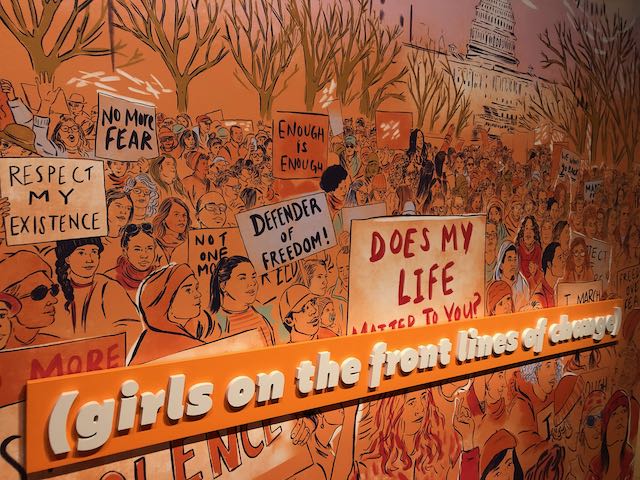
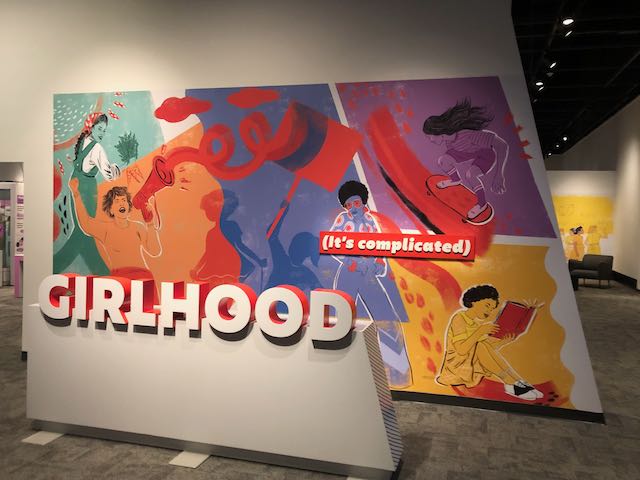
Created in 2020 by the National Museum of American History and still traveling to different historical museums around the country, Girlhood (It’s complicated) “engages audiences in timely conversations about women’s history and women’s issues through unexpected stories of girlhood in the United States.” As a short video near the start of the exhibit explains, the 100th anniversary of the 19th Amendment inspired the exhibit’s designers to ask questions like, “Who gets to decide what it means to be a girl?” and “How does girlhood make people political?” (or even “stretch our imagination of what’s political”).
But politics is just one of five themes you’ll find in an exhibit that skillfully integrates images, videos, objects, and other sources to explore girlhood through education, fashion, wellness, and work (that last one doing well to recognize belatedly that many girls in American history have been forced into employment — including slavery — from a young age).
It was interesting to overhear some older women prompted to share their own memories of girlhood, and to see the variety of notes that visitors of various ages had left on the wall as they left. But it was too bad that there were no school groups touring while I was there last Friday; I’d be especially interested to see how present-day girls interpret the history of girlhood.
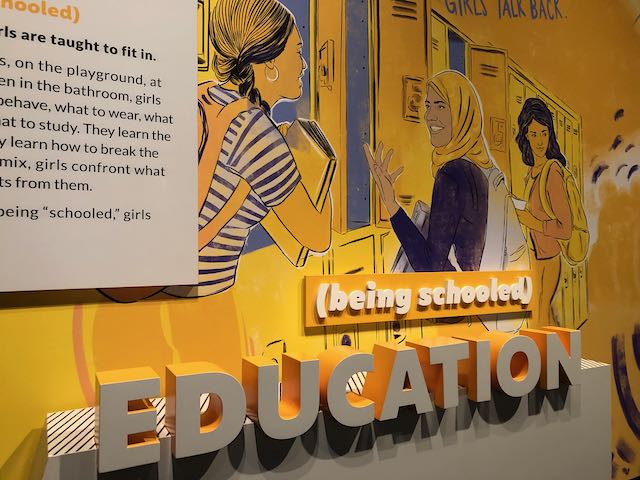
So know that the focus here is on gender as it’s perceived, experienced, interpreted, and debated in the elementary and secondary school years, not college and after. But there’s certainly overlap with questions and themes that will show up in our Women of Bethel project. That was easiest to see in a section on women’s sports that was customized to tell Minnesotan stories. For example, basketball players from the College of St. Scholastica showed up in a decade-by-decade series of photos that reminded me of what I’ve already seen in Bethel yearbooks. And what the associate director of the state high school league was quoted as saying could probably apply to colleges like Bethel: women’s sports were already active before 1972, but Title IX did provide athletic directors, coaches, student-athletes, and boosters with “a stick” to promote the growth of such programs in the face of opposition or skepticism.
As is often true of works of public history, religion was not a central theme, but it was present in spots. One small display hinted at how “religious communities have long played a role in defining the transition from girlhood to womanhood with rites of passage”; another featured a “vow of purity” card inscribed with the words of 2 Timothy 2:22 (“Flee also youthful lusts; but follow righteousness, faith, charity, peace, with them that call on the Lord out of a pure heart”). I’m sure we’ll say much more about Christianity and gender here, as our project takes shape.
Girlhood will be on display at the Minnesota History Center in St. Paul through June 1, 2025. But if you happen to visit the exhibit in the next couple of weeks, feel free to leave a comment here while I’m out of town!
One goal of this blog is to help involve members of the Bethel community in doing the history of Bethel, so comments are always welcome! Just know that if you leave a comment at the project blog, I’ll take that as expressing your permission to quote it in the project.
 The Women of Bethel